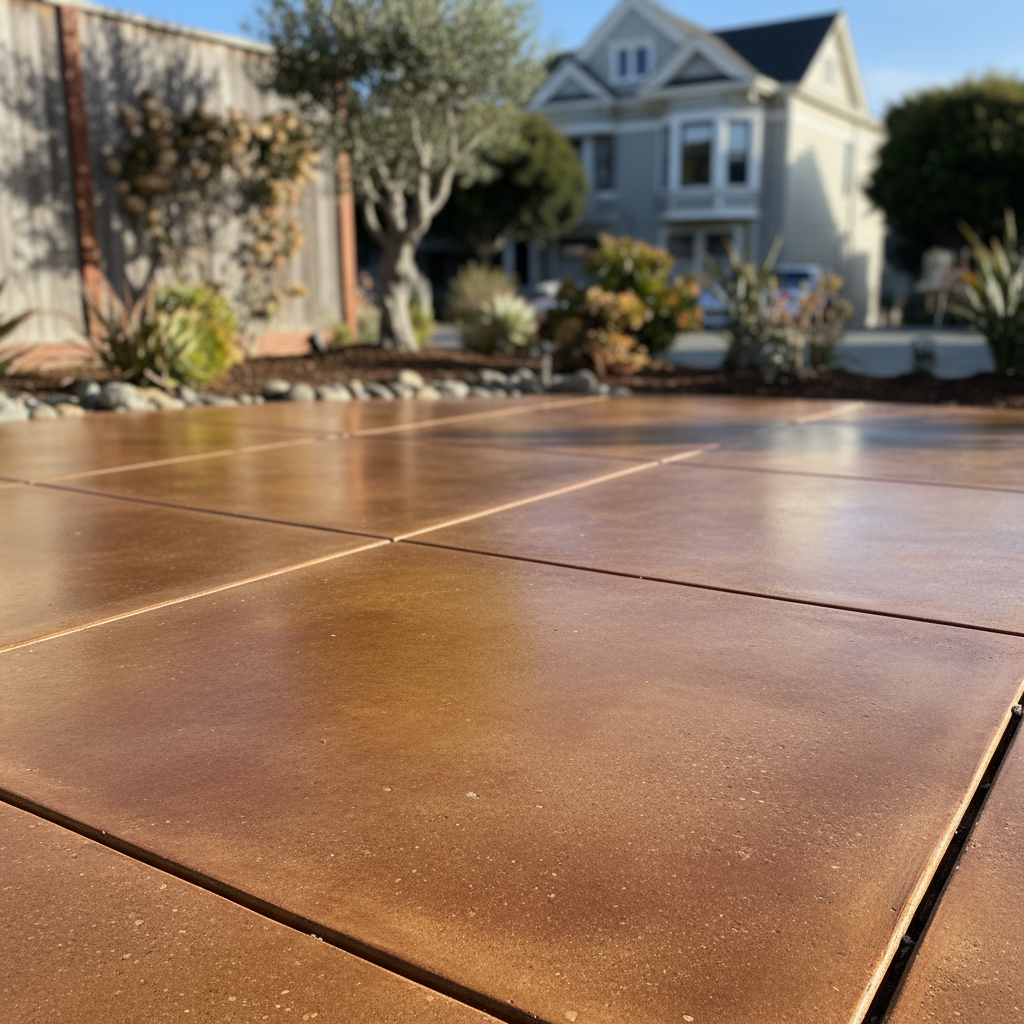
You're thinking about staining your concrete, and you've got questions. Good. You should. It's an investment, after all, and you want to make sure you're getting it right. I've been doing this for years here in San Francisco, and I've heard pretty much every question under the sun. So, let's dig into some of the tougher ones you might have, the stuff you don't always find on those glossy marketing sites.
Can I stain my old, cracked concrete?
This is a big one, and the short answer is: maybe, but don't expect miracles. Staining concrete isn't like painting over a bad wall. The stain penetrates the surface, so any imperfections – cracks, spalling, previous repairs, or even oil stains – they're all going to show through, sometimes even more prominently. We can patch cracks, sure, but those patches will absorb stain differently, often looking like, well, patches. If your concrete is severely damaged, uneven, or has a lot of previous coatings, staining might not give you the uniform, beautiful finish you're hoping for. Sometimes, the best solution for really old, beat-up concrete is to resurface it first, or even pour a new slab. We'll always give you an honest assessment before we start.
How long does stained concrete really last in our SF climate?
That's a fair question, especially with our microclimates. You've got the fog and dampness in the Sunset, and then the sun beating down in the Mission. Indoors, stained concrete can last indefinitely with proper care. Outdoors, it's a different story. The biggest enemy is UV exposure and abrasion. A high-quality, UV-resistant sealer is absolutely crucial here in San Francisco. Without it, the color will fade, sometimes unevenly. With a good sealer and regular maintenance – which usually means re-sealing every 2-5 years depending on traffic and exposure – you can expect your outdoor stained concrete to look great for 10+ years. If you skimp on the sealer or maintenance, you'll be disappointed, I promise you.
Will staining make my concrete slippery when wet?
This is a common concern, especially for outdoor areas or even indoors in kitchens or bathrooms. The stain itself doesn't make concrete slippery. It's the sealer that can create a slick surface. Most reputable contractors, including us at Kingdom Concrete San Francisco, will use a sealer with an anti-slip additive, especially for exterior applications like patios, walkways, or pool decks. These additives are usually fine grit materials that create a subtle texture without changing the look of the stain. If you're particularly worried, make sure to discuss anti-slip options with your contractor. Don't just assume it'll be safe.
What about pet stains or spills on stained concrete?
Good question for anyone with furry friends or clumsy family members. Stained and sealed concrete is pretty resistant to most spills, especially if you wipe them up quickly. The sealer acts as a protective barrier. However, highly acidic substances (like pet urine, vinegar, or citrus juices) or harsh chemicals can etch or dull the sealer if left for too long. If the sealer gets compromised, the concrete underneath can then be affected. So, clean up spills promptly. For pet accidents, use a mild, pH-neutral cleaner. Don't reach for the bleach or harsh abrasives, as they can damage the sealer over time.
Can I change the color of my stained concrete later?
This is where it gets tricky. Once concrete is stained, especially with an acid-based stain, that color is pretty much permanent. Acid stains react chemically with the concrete, creating a translucent, mottled effect that's part of the concrete itself. You can't just 'paint over' it with another stain and expect the same result. If you want to change the color significantly, your options are usually limited to applying an opaque concrete coating or an epoxy, which will completely cover the original stain. Or, you might be able to apply a different color of dye or water-based stain over it, but the original color will likely influence the final look, and it won't have the same depth as a fresh stain. It's not a simple 'redo' button.
I've heard about 'efflorescence' on concrete. Will staining prevent that?
Efflorescence is that white, powdery stuff that sometimes appears on concrete, especially in damp environments like parts of San Francisco where we get a lot of fog and moisture. It's caused by soluble salts rising to the surface as water evaporates. Staining won't prevent efflorescence. In fact, sometimes the sealing process can temporarily trap moisture, which might even encourage it if the concrete isn't properly prepared or cured. The best way to deal with efflorescence is to address the moisture source, ensure proper drainage, and clean it off if it appears. A good sealer can help reduce its appearance by slowing down moisture movement, but it's not a magic bullet. If you see it, don't panic. It's usually just cosmetic.
What's the deal with 'hot tire pickup' on stained garage floors?
Ah, the dreaded hot tire pickup. This is when the hot tires from your car literally pull up the sealer or coating from your garage floor, leaving unsightly marks. It's a real problem, and it's something you need to be aware of if you're staining your garage. Standard acrylic sealers, while good for patios, often aren't tough enough for garage floors. For garages, you really need a high-performance epoxy or polyaspartic coating. These are much more durable and resistant to the heat and chemicals a garage floor faces. If a contractor tells you a simple acrylic sealer will be fine for your garage, get a second opinion. You'll regret it later.