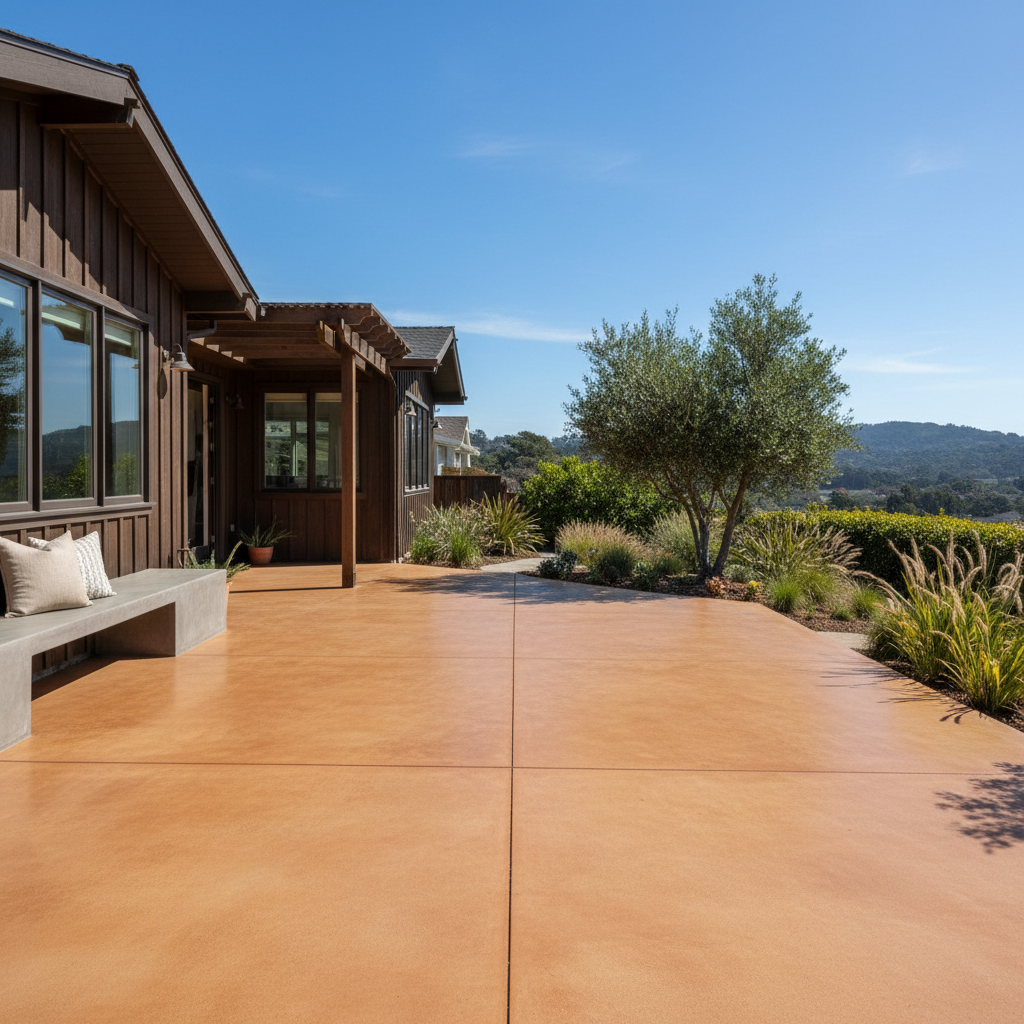
Your Stained Concrete: Built to Last, But Not Bulletproof
So, you've got stained concrete, maybe a patio in the Mission or a walkway over in the Sunset. It looks fantastic, doesn't it? That's because concrete staining, when it's done right, creates a tough, long-lasting finish that really boosts your property's appeal. The stain actually soaks into the concrete, becoming a part of the material itself. This is different from paint, which just sits on top. That means it won't peel or fade easily, which is a huge plus. But even the strongest stuff needs a little TLC to keep it looking its best, especially here in San Francisco.
Our city's climate, with all its famous fog, cool summers, and wet winters, can really beat up outdoor surfaces. We've got these crazy microclimates that can swing temperatures by 15 degrees in just a few miles, from the foggy western side to those warmer, Bay-facing neighborhoods. That constant change, plus all the moisture, means you can't just put down your stained concrete and forget about it. Over my years at Kingdom Concrete San Francisco, I've learned a few things about keeping that beautiful stain vibrant and protected. Let me tell you about them.
Making Your Stained Concrete Last Longer
What's the secret to long-lasting stained concrete? Sealing it, and then resealing it. Think of the sealer as a shield, protecting that rich color and the concrete underneath. Most residential stained concrete needs resealing every 2-5 years. But this can change quite a bit, depending on how much foot traffic it gets and how exposed it is to the weather. High-traffic spots, like a busy commercial entryway, might need it more often—say, every 1-3 years.
- Pick the Right Sealer: There are a few different kinds of sealers out there. Acrylic sealers are pretty common and often a good choice for stained concrete because they're tough and really make the color pop. Penetrating sealers, on the other hand, soak right into the concrete. They protect it without changing its look much, and they can last longer, sometimes 5-10 years. Polyurethane or epoxy sealers can typically last 5-7 years. The best choice really depends on your specific surface and how you use it.
- Proper Application is Key: You can't just slop it on. The surface absolutely has to be super clean and prepped correctly. If it's not, the sealer won't stick or perform well. If there's dirt or moisture trapped underneath, you'll likely see peeling or cloudiness down the road.
- UV Protection Matters: Even with our often-cloudy skies, UV rays can still break down sealers over time. Using a UV-resistant sealer is a smart move, especially for outdoor areas that catch some sun.
Regular Maintenance: It's Simpler Than You Think
Keeping your stained concrete looking good isn't a huge chore, but it does require a bit of consistency. Here's the basic rundown:
- Clean It Regularly: Concrete is porous, so it can attract dirt, grime, and even things like oil, grease, or algae. Don't let that stuff just sit there and soak in! A good sweep to get rid of loose debris is a great start. For a deeper clean, use a mild, pH-neutral cleaner and a soft brush. For really tough grime, pressure washing can work wonders, but be careful with the pressure and your technique. You don't want to damage the sealer or the concrete itself. We always recommend eco-friendly cleaning agents, by the way.
- Deal with Spills Right Away: Oil, wine, food spills—they can all stain, even through a sealer, if you leave them too long. Blot them up quickly.
- Protect from Heavy Objects: If you've got heavy planters or furniture, use pads underneath. This prevents scratching or scuffing the surface.
- Check Expansion Joints: These are really important for letting concrete expand and contract without cracking. Just make sure they're clean and free of debris.
Warning Signs of Trouble: Don't Ignore These
Your concrete will definitely let you know when it needs some attention. Keep an eye out for these warning signs:
- Dull or Chalky Look: If your once vibrant stained concrete starts looking faded, dull, or chalky, that's a clear sign your sealer is wearing thin.
- Water Doesn't Bead Anymore: When water hits a properly sealed surface, it should bead up like little pearls. If it just soaks in, your sealer isn't doing its job anymore.
- Peeling, Flaking, or Bubbling: This means the sealer is failing. It could be from a bad application, old age, or moisture getting trapped underneath.
- Cracks: Hairline cracks might not be a huge deal, but if you see cracks wider than 1/16 inch, or if they're growing, that's a definite red flag. Cracks let moisture get into the concrete, which can lead to bigger problems, especially with our wet San Francisco winters.
- Discoloration or Stains: While staining adds color, new dark patches or streaks could mean too much moisture is getting absorbed. Rust stains, especially around metal fixtures, might point to corrosion of rebar inside the concrete.
- Uneven or Sunken Areas: This isn't just cosmetic; it's a sign of foundational issues, like soil erosion underneath.
When to Call a Professional
Look, some things you can handle yourself, but for others, you really need a pro. Here's when to pick up the phone:
- Major Sealer Failure: If you've got widespread peeling, bubbling, or significant fading, a professional can properly strip the old sealer and put on a new one. Trying to just add a new coat over a failing one usually doesn't end well.
- Deep or Expanding Cracks: If you see structural cracks—especially those wider than 1/16 inch, or if they're getting worse—don't mess around. You'll need an assessment to figure out the cause and the right repair.
- Water Intrusion: If you're seeing persistent dampness, water stains, or efflorescence (those white powdery deposits) on your concrete, it means water is getting in where it shouldn't. This needs to be addressed quickly to prevent bigger structural issues, believe me.
- Uneven or Settling Concrete: This isn't just a cosmetic problem; it can be a safety hazard and points to a serious underlying issue with your foundation or the soil.
- Before Resealing: If you're unsure about the type of sealer you have, or how to properly prep the surface, it's always best to get a professional opinion. They can make sure the right product is used and applied correctly, saving you headaches and money in the long run.
Your stained concrete is an investment. With a little regular care and knowing when to call in the experts, you'll keep it looking fantastic for years to come, no matter what San Francisco's weather throws at it.