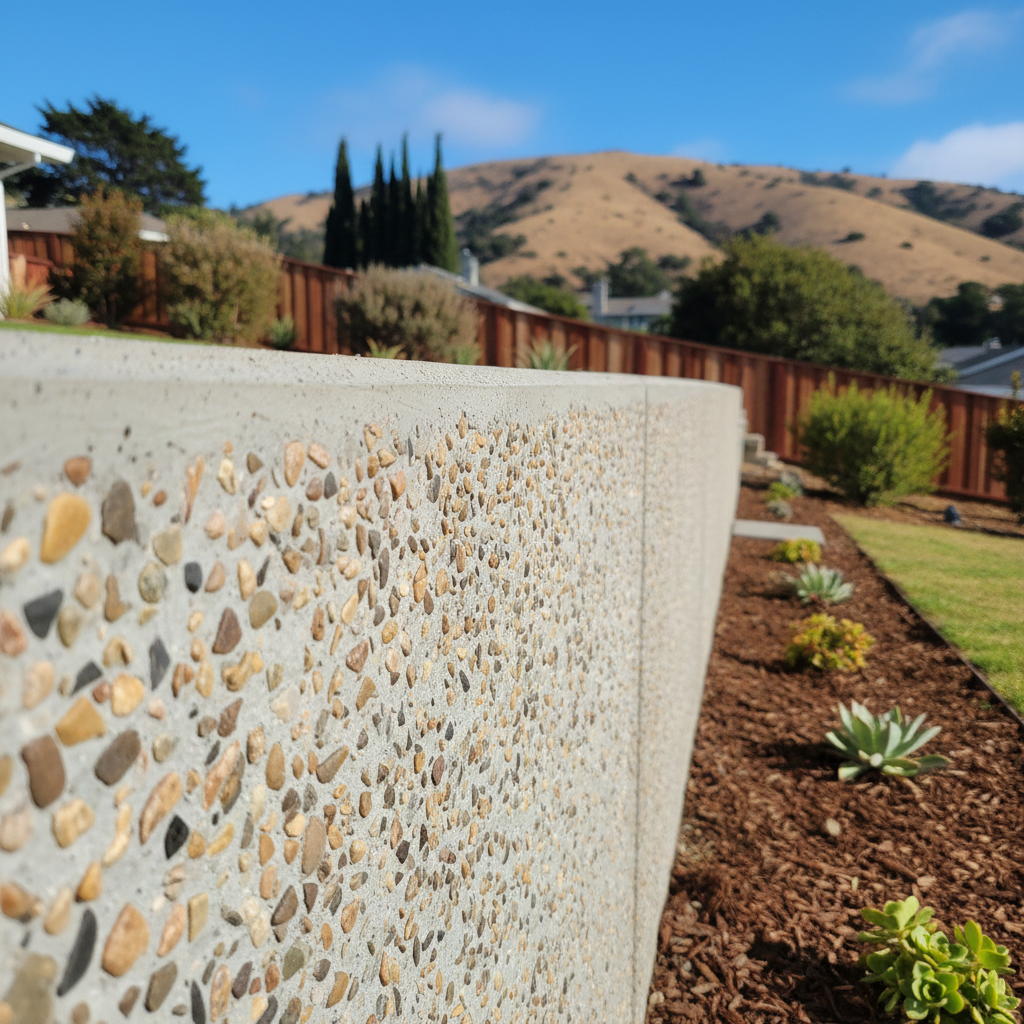
So, you’ve got a sloped yard, huh? Or maybe your neighbor's yard is pushing into yours. That’s super common here in San Francisco, especially in neighborhoods like Bernal Heights or Potrero Hill where you're always dealing with hills. You’re likely looking at a retaining wall, and concrete is often the best way to go. Homeowners ask me a lot of the same questions, so I figured I’d lay it all out for you.
What exactly is a concrete retaining wall for?
Simply put, it holds back soil. When you have a change in elevation, like a hillside or a raised garden bed, the soil wants to move downhill. A retaining wall acts as a barrier, preventing erosion, creating usable flat land, and stopping soil from putting pressure on your house or other structures. It's not just about looks; it's about stability and preventing bigger problems down the road.
Do I even need a permit for this in San Francisco?
Oh, absolutely. For most retaining walls, especially anything over three or four feet tall, you're going to need a permit from the San Francisco Department of Building Inspection (DBI). This isn't just red tape; it's about safety. They want to make sure the wall is engineered correctly, especially with our seismic activity and varied soil conditions here. You'll need plans drawn up by a structural engineer, and then we, as the contractor, will pull the permit. Don't try to skip this; it'll cost you way more in fines and rework later.
What kind of concrete walls are there?
When we're talking concrete, you've mainly got two types for retaining walls: poured-in-place and segmental block. Poured-in-place is exactly what it sounds like – we build forms, pour wet concrete, and it cures into a solid, monolithic structure. These are incredibly strong and can be reinforced with rebar for serious stability. Segmental block walls use interlocking concrete blocks, often with a geogrid reinforcement extending back into the soil. They're usually quicker to install and can be more aesthetically flexible. For really tall walls or walls holding back a lot of pressure, poured concrete is often the go-to. For something smaller, or where you want a specific look, blocks can work well. We'll help you figure out what's best for your specific situation.
How long does a concrete retaining wall last?
A properly designed and installed concrete retaining wall? Decades. Seriously, 50 to 100 years isn't out of the question. The key is that 'properly designed and installed' part. That means good drainage behind the wall, adequate reinforcement, and correct footing depth. If you cut corners, you'll be looking at cracks, bowing, or even failure much sooner. It’s an investment, so you want it done right the first time. That's where a company like Kingdom Concrete San Francisco comes in – we build these things to last.
What about drainage? Is that really that important?
Crucial. Absolutely critical. This is probably the number one reason retaining walls fail. Water builds up behind the wall, creating hydrostatic pressure that can easily push even the strongest concrete wall over. We always install a drainage system, usually a perforated pipe (a 'French drain') at the base of the wall, covered with gravel and a filter fabric. This collects the water and directs it away. Without proper drainage, your wall is a ticking time bomb, no matter how much concrete or rebar we put in it.
How much does a concrete retaining wall cost in San Francisco?
This is the big question, right? And it's tough to give a simple answer because every wall is custom. Factors like height, length, accessibility to the site, soil conditions, the need for engineering, and permit fees all play a huge role. Generally, you're looking at anywhere from $150 to $400 per square foot of wall face, sometimes more for complex jobs or difficult access. It’s not cheap, but neither is a collapsed hillside. Get a few detailed bids, make sure they include everything from excavation to drainage to backfill, and don't just go with the lowest price. Quality and experience matter a lot here.
Look, building a retaining wall isn't a DIY weekend project. It requires expertise in engineering, excavation, concrete work, and drainage. If you're in San Francisco and thinking about a retaining wall, give us a call at Kingdom Concrete San Francisco. We'll come out, take a look, and give you an honest assessment of what you need.