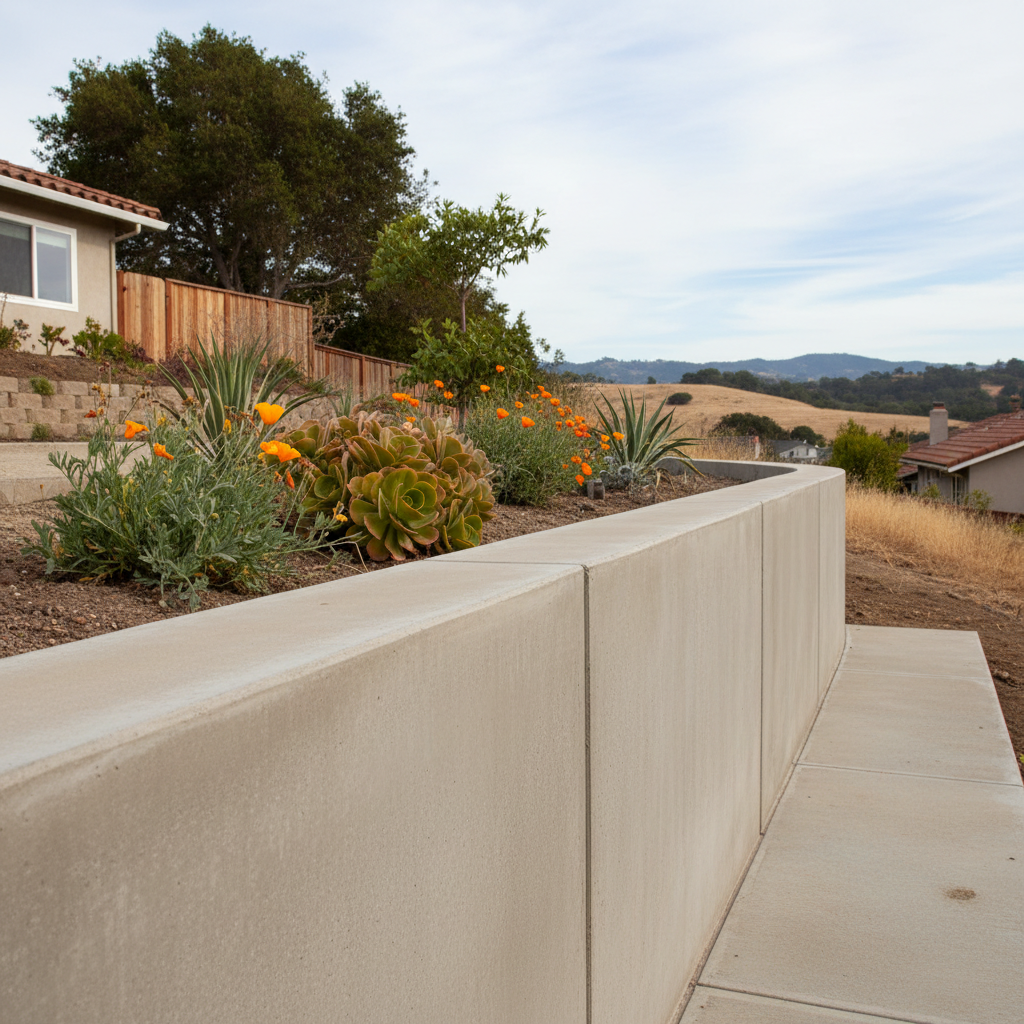
Thinking about a concrete retaining wall for your San Francisco property? Good call. It's a smart move, especially with all our hills and those tight spaces we deal with. People ask me about these walls a lot, so I'm just going to lay out what you really need to know. No fluff, I promise.
Why do I even need a retaining wall?
Look, in a city like ours, with all the slopes and varied terrain, a retaining wall isn't just for looks. Often, it's a real necessity. You need one to hold back soil, stop erosion, and create usable, level land where there otherwise wouldn't be any. Maybe you're cutting into a hillside for a new patio, or your yard is just constantly washing away. A solid concrete wall keeps your property stable, protects your foundation, and can even add valuable flat space for landscaping or an outdoor living area. It's really about structural integrity and making the most of your lot.
How much does a concrete retaining wall cost in San Francisco?
This is the big one, right? And honestly, there's no single answer because every project is different. But I can give you a ballpark figure. For a basic, functional concrete retaining wall, you're generally looking at anywhere from $150 to $400 per linear foot. That's a pretty wide range, I know. What drives the cost up? Things like the wall's height and thickness, the specific concrete mix needed, how much excavation is involved (especially if we hit rock, which happens a lot here in SF, believe me), drainage requirements, and whether you want any decorative finishes. Permitting in San Francisco also adds a layer of cost and complexity you won't find in many other places. Don't cheap out here; a poorly built wall can fail, and that's a much bigger headache and expense down the road.
What's the typical lifespan of a concrete retaining wall?
A properly designed and installed concrete retaining wall, especially one built by folks who know what they're doing like us at Kingdom Concrete San Francisco, should last you 50 to 100 years, easily. We're talking decades here. The key is a proper foundation, good drainage, and using the right rebar and concrete mix for our local conditions. If it's done right, it's pretty much a 'set it and forget it' kind of structure. You might see some minor surface cracks over time, which are usually just cosmetic, but the structural integrity should hold up for generations.
Do I need a permit for a retaining wall in San Francisco?
Absolutely, yes. For almost any retaining wall project in San Francisco, you're going to need permits from the Department of Building Inspection (DBI). The rules are pretty strict, especially if the wall is over 3 or 4 feet tall, or if it's supporting a significant load or adjacent to a property line. You'll likely need engineering plans drawn up by a licensed structural engineer. Don't even think about skipping this step. The city will shut you down, fine you, and make you tear it out and start over. It's a hassle, but it's there for safety and to make sure things are built to code. We can help you navigate that process.
What about drainage? Is that really important?
Crucial. Non-negotiable. If you don't have proper drainage behind a retaining wall, you're asking for trouble. Water pressure builds up behind the wall, and eventually, it's going to find a way out, often by pushing the wall over or cracking it. We always install a drainage system, typically a perforated pipe (what we call a 'French drain') at the base of the wall, backfilled with gravel, to collect water and direct it away. This relieves hydrostatic pressure and is one of the most important things we do to ensure your wall lasts. Especially with our rainy winters, you can't afford to ignore drainage.
Can I build a retaining wall myself?
Unless you're a seasoned concrete professional with experience in structural engineering and heavy equipment operation, I'd strongly advise against it. Retaining walls aren't like building a garden bed, you know? They're complex structural elements that need to withstand immense pressure. There's a lot that goes into it: proper excavation, compacting the base, rebar placement, concrete mix ratios, formwork, and curing. One mistake can lead to failure, and that's not just a financial loss; it can be a safety hazard. This is definitely a job for experienced pros who understand the local soil conditions and building codes.
What kind of maintenance does a concrete retaining wall need?
Honestly, very little. That's one of the big benefits of concrete. Once it's in, you just need to keep an eye on it. Make sure the drainage outlets aren't clogged with leaves or debris. Check for any significant cracks or bulging, though these are rare if it's built right. If you have landscaping around it, just make sure roots aren't growing into the wall or drainage system. A quick visual inspection a couple of times a year is usually all it takes. It's a pretty low-fuss solution once it's properly installed.
What if my neighbor's property is higher than mine?
This is a common scenario in San Francisco, especially in places like Bernal Heights or Noe Valley where properties are terraced. If the retaining wall is holding back soil from your neighbor's property, or if it's right on the property line, things get a bit more complicated. You'll need to understand property lines, easements, and potentially involve your neighbor in the discussion. Sometimes, it's a shared responsibility, or one party might be solely responsible depending on how the grade was established. Always best to consult with a surveyor and get legal advice if there's any ambiguity, and definitely talk to your neighbor early on. Clear communication can save a lot of headaches later.